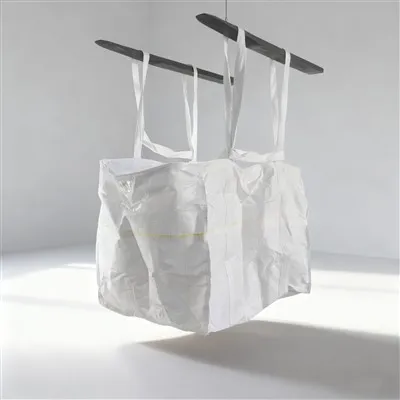
Accurately measuring the capacity of a square jumbo bag is crucial for both suppliers and customers. As a square jumbo bag supplier, I understand the significance of providing precise capacity information to ensure that our products meet the diverse needs of our clients. In this blog post, I will share some effective methods and considerations for accurately measuring the capacity of square jumbo bags.
Understanding the Basics of Square Jumbo Bags
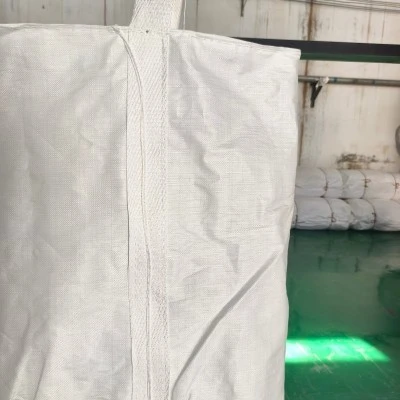
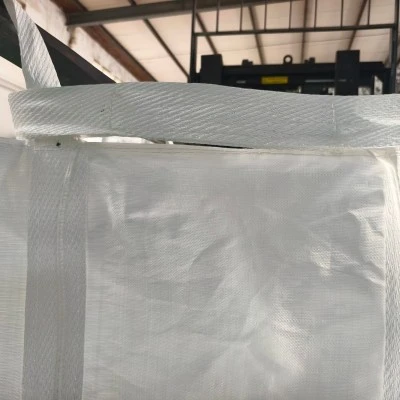
Square jumbo bags, also known as flexible intermediate bulk containers (FIBCs), are large, flexible containers used for storing and transporting a wide range of dry, flowable products such as grains, chemicals, and minerals. These bags are typically made of woven polypropylene fabric and come in various sizes and designs to accommodate different product volumes and handling requirements.
The capacity of a square jumbo bag is usually measured in cubic meters (m³) or cubic feet (ft³) and represents the volume of material that the bag can hold. However, accurately determining this capacity can be challenging due to factors such as the bag's shape, the density of the product being stored, and the way the bag is filled and stacked.
Factors Affecting the Capacity of Square Jumbo Bags
Before we delve into the measurement methods, it's important to understand the factors that can affect the capacity of square jumbo bags. These factors include:
- Bag Design: The shape and dimensions of the bag, including its length, width, and height, play a significant role in determining its capacity. Square jumbo bags are typically designed with a specific aspect ratio to ensure optimal stability and handling.
- Fabric Thickness and Quality: The thickness and quality of the woven polypropylene fabric used to make the bag can affect its flexibility and durability. Thicker fabrics may provide more strength but can also reduce the bag's capacity slightly.
- Product Density: The density of the product being stored in the bag is a crucial factor in determining its capacity. Products with higher densities will require less volume to achieve the same weight, while products with lower densities will require more volume.
- Filling and Stacking Method: The way the bag is filled and stacked can also affect its capacity. Overfilling the bag or stacking it improperly can cause the bag to bulge or deform, reducing its effective capacity.
Methods for Measuring the Capacity of Square Jumbo Bags
There are several methods for measuring the capacity of square jumbo bags, each with its own advantages and limitations. Here are some of the most commonly used methods:
1. Geometric Calculation
The simplest method for estimating the capacity of a square jumbo bag is to use geometric calculations based on its dimensions. This method assumes that the bag is perfectly rectangular and that the product fills the bag evenly.
To calculate the capacity of a square jumbo bag using geometric calculations, you need to measure the length (L), width (W), and height (H) of the bag in meters or feet. The capacity (V) can then be calculated using the following formula:
V = L x W x H
For example, if a square jumbo bag has a length of 1.2 meters, a width of 1.2 meters, and a height of 1.5 meters, its capacity would be:
V = 1.2 x 1.2 x 1.5 = 2.16 m³
While this method provides a quick and easy way to estimate the capacity of a square jumbo bag, it may not be accurate in real-world applications due to factors such as bag deformation and uneven filling.
2. Water Displacement Method
The water displacement method is a more accurate way to measure the capacity of a square jumbo bag. This method involves filling the bag with water and measuring the volume of water displaced.
To use the water displacement method, you need to place the empty bag in a large container and fill it with water until it is completely submerged. The volume of water displaced by the bag is equal to its capacity.
This method provides a more accurate measurement of the bag's capacity because it takes into account the actual shape and volume of the bag, as well as any deformation or bulging that may occur during filling. However, it can be time-consuming and messy, and it may not be suitable for all types of products.
3. Product Filling Method
The product filling method is the most practical way to measure the capacity of a square jumbo bag in real-world applications. This method involves filling the bag with the actual product being stored and weighing the filled bag to determine its weight.
To use the product filling method, you need to fill the bag with the product until it is level with the top of the bag. The weight of the filled bag can then be measured using a scale, and the capacity can be calculated based on the density of the product.
For example, if a square jumbo bag filled with a product weighing 1000 kilograms has a density of 500 kilograms per cubic meter, its capacity would be:
V = 1000 / 500 = 2 m³
This method provides a more accurate measurement of the bag's capacity because it takes into account the actual density and volume of the product being stored. However, it requires access to the product and a scale, and it may not be suitable for all types of products.
Considerations for Accurate Measurement
Regardless of the method you choose, there are several considerations that you need to keep in mind to ensure accurate measurement of the capacity of square jumbo bags. These considerations include:
- Bag Preparation: Before measuring the capacity of the bag, make sure it is clean, dry, and free of any debris or damage. This will ensure that the bag is in good condition and that the measurement is accurate.
- Filling Method: When filling the bag, make sure to use a consistent filling method to ensure that the product is distributed evenly throughout the bag. This will help to minimize any variations in the bag's capacity due to uneven filling.
- Measurement Accuracy: Use accurate measuring tools and techniques to ensure that the dimensions and weight of the bag and the product are measured correctly. This will help to minimize any errors in the capacity calculation.
- Environmental Factors: Consider the environmental factors that may affect the capacity of the bag, such as temperature, humidity, and pressure. These factors can cause the bag to expand or contract, which can affect its capacity.
Conclusion
Accurately measuring the capacity of a square jumbo bag is essential for ensuring that our products meet the needs of our customers. By understanding the factors that affect the capacity of the bag and using the appropriate measurement methods, we can provide our customers with accurate capacity information and ensure that our products are suitable for their specific applications.
If you are interested in purchasing Aluminum Foil Ton Bag, The Factory Produces And Sells Bulk Bags, or Animal Feed Big Bag, please feel free to contact us for more information and to discuss your specific requirements. We are committed to providing high-quality products and excellent customer service, and we look forward to working with you.
References
- ASTM D3951 - Standard Practice for Packaging and Unitizing Commodities for Distribution.
- ISO 21898 - Flexible Intermediate Bulk Containers (FIBCs) - Safety.
- European Standard EN 1898 - Flexible Intermediate Bulk Containers (FIBCs) - General Requirements and Tests.