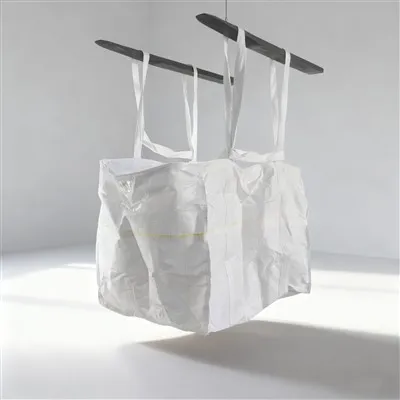
Hey there! As a supplier of Flexible Intermediate Bulk Containers (FIBC), I often get asked about the wear-resistant properties of these handy containers. So, I thought I'd take a deep dive into this topic and share some insights with you.
What is FIBC and Why Wear Resistance Matters
First off, let's quickly cover what FIBC is. FIBCs, also known as bulk bags, jumbo bags, or ton bags, are large, flexible containers used for storing and transporting a wide range of dry, flowable products, such as grains, chemicals, and minerals. These bags are designed to handle heavy loads and withstand various handling conditions.
Wear resistance is a crucial factor when it comes to FIBCs. Since they're used for transporting and storing goods, they're often subjected to rough handling, friction, and abrasion. A wear-resistant FIBC can last longer, reducing the need for frequent replacements and saving you money in the long run. It also ensures the safety of your products during transit, as a bag that's prone to wear and tear can potentially rupture, leading to product loss or even safety hazards.
Factors Affecting Wear Resistance
There are several factors that influence the wear-resistant properties of FIBCs. Let's take a look at some of the key ones:
Material
The material used to make the FIBC plays a significant role in its wear resistance. Most FIBCs are made from polypropylene, a thermoplastic polymer known for its strength, durability, and resistance to chemicals and moisture. Polypropylene is also inherently wear-resistant, making it an ideal choice for FIBCs.
For premium wear resistance, you might want to check out our Premium Polypropylene FIBC Bags. These bags are made from high-quality polypropylene that offers superior strength and abrasion resistance, ensuring long-lasting performance even in the most demanding applications.
Weave Design
The weave design of the FIBC fabric also affects its wear resistance. There are two main types of weaves used in FIBCs: plain weave and twill weave.
- Plain Weave: This is the simplest and most common weave design. It consists of warp and weft yarns that cross each other at right angles. Plain weave fabrics are generally more rigid and less flexible than twill weave fabrics, but they offer good resistance to abrasion.
- Twill Weave: Twill weave fabrics have a diagonal pattern created by the way the warp and weft yarns are interlaced. This weave design makes the fabric more flexible and drapable, while still providing excellent wear resistance. Twill weave FIBCs are often used for applications that require a higher degree of flexibility, such as packaging irregularly shaped products.
Coating
Applying a coating to the FIBC fabric can significantly enhance its wear resistance. Coatings can provide a protective layer that reduces friction and abrasion, making the bag more durable and long-lasting.
There are several types of coatings available for FIBCs, including polyethylene (PE) coatings, polyvinyl chloride (PVC) coatings, and polyurethane (PU) coatings. Each type of coating offers different levels of wear resistance, chemical resistance, and moisture resistance, so it's important to choose the right coating for your specific application.
Bag Design
The design of the FIBC also plays a role in its wear resistance. For example, bags with reinforced corners and seams are more resistant to tearing and abrasion than bags without reinforcement. Additionally, bags with a smooth surface are less likely to catch on rough surfaces, reducing the risk of wear and tear.
Our Conductive Container Bag is a great example of a well-designed FIBC that offers excellent wear resistance. This bag features a conductive fabric that helps to prevent static electricity buildup, reducing the risk of explosions and fires. It also has reinforced corners and seams for added durability, making it suitable for use in a wide range of industries.


Testing Wear Resistance
To ensure that our FIBCs meet the highest standards of wear resistance, we conduct a series of tests on our products. These tests simulate the real-world conditions that the bags are likely to encounter during use, allowing us to identify any potential issues and make necessary improvements.
One of the most common tests used to measure wear resistance is the Taber Abrasion Test. In this test, a small sample of the FIBC fabric is mounted on a rotating platform and subjected to abrasion by a pair of abrasive wheels. The amount of wear is measured by weighing the sample before and after the test, and the results are expressed in terms of weight loss.
Another test that we use is the Martindale Abrasion Test. This test is similar to the Taber Abrasion Test, but it uses a different type of abrasion mechanism. In the Martindale Abrasion Test, the fabric sample is rubbed against a standard abrasive fabric in a circular motion, and the amount of wear is measured by counting the number of cycles required to cause a specified amount of damage to the fabric.
Applications of Wear-Resistant FIBCs
Wear-resistant FIBCs are used in a wide range of industries and applications. Here are some examples:
- Agriculture: FIBCs are commonly used to store and transport grains, seeds, and fertilizers. Wear-resistant bags are essential in this industry to ensure that the products are protected during handling and transportation.
- Chemical Industry: Chemicals can be corrosive and abrasive, so it's important to use FIBCs that are resistant to wear and tear. Our wear-resistant FIBCs are designed to withstand the harsh conditions of the chemical industry, ensuring the safe and secure transportation of chemicals.
- Mining Industry: The mining industry involves the handling of heavy, abrasive materials, such as coal, ore, and minerals. Wear-resistant FIBCs are used to store and transport these materials, reducing the risk of damage to the bags and ensuring the efficient operation of the mining process.
- Construction Industry: FIBCs are used in the construction industry to store and transport building materials, such as cement, sand, and gravel. Wear-resistant bags are essential in this industry to withstand the rough handling and abrasive nature of these materials.
Our Three Lifting Bottom Ton Bag
One of our popular products is the Three Lifting Bottom Ton Bag. This bag is designed with three lifting loops at the bottom, which makes it easy to lift and transport heavy loads. It also has a wear-resistant polypropylene fabric and reinforced corners and seams, ensuring excellent durability and long-lasting performance.
The three lifting bottom design of this bag provides added stability and balance during lifting and transportation, reducing the risk of the bag tipping over or spilling its contents. It's suitable for use in a wide range of industries, including agriculture, chemicals, mining, and construction.
Conclusion
In conclusion, wear resistance is a crucial factor when it comes to FIBCs. By choosing a wear-resistant FIBC, you can ensure the safety and integrity of your products during storage and transportation, while also saving money on replacement costs.
At our company, we're committed to providing high-quality FIBCs that offer excellent wear resistance and performance. Our Premium Polypropylene FIBC Bags, Conductive Container Bag, and Three Lifting Bottom Ton Bag are just a few examples of our top-of-the-line products.
If you're interested in learning more about our wear-resistant FIBCs or would like to discuss your specific requirements, please don't hesitate to contact us. We'd be happy to help you find the right solution for your needs.
References
- ASTM International. (2022). Standard Test Methods for Measuring Abrasion Resistance of Textile Fabrics (Rotary Platform, Double-Head Method). ASTM D3884 - 22.
- ISO. (2021). Flexible Intermediate Bulk Containers (FIBCs) - Vocabulary, Design General Requirements and Testing. ISO 21898:2021.