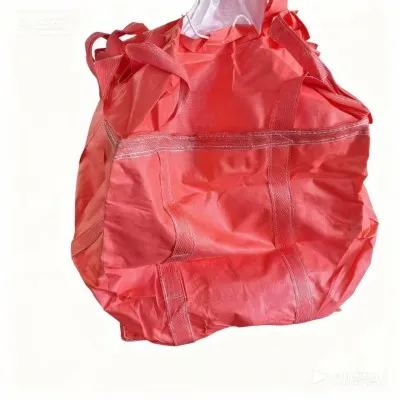
Hey there! As a supplier of Flexible Intermediate Bulk Containers (FIBC), I often get asked about the anti - corrosion properties of these bags. So, I thought I'd write this blog to share some insights on this topic.
First off, let's understand what corrosion is. Corrosion is basically the deterioration of a material due to chemical reactions with its environment. For FIBCs, the environment can include things like moisture, chemicals, and even certain types of gases. If a FIBC gets corroded, it can lead to a whole bunch of problems, like reduced strength, leaks, and even contamination of the contents inside.
One of the key factors that contribute to the anti - corrosion properties of FIBCs is the material they're made from. Most FIBCs are made from polypropylene, which is a type of plastic. Polypropylene has some really great properties when it comes to corrosion resistance. It's resistant to a wide range of chemicals, including acids, alkalis, and many organic solvents. This means that if you're using FIBCs to store or transport chemicals, polypropylene FIBCs can handle it without getting corroded easily.
For example, if you're in the business of transporting toner for tapioca starch noodles, you can rely on FIBCs. Check out our Toner Bag Of Tapioca Starch Noodles. These bags are made from high - quality polypropylene, which protects the toner from any potential corrosion caused by environmental factors during transportation and storage.


Another aspect that affects the anti - corrosion ability of FIBCs is the way they're manufactured. At our place, we use advanced manufacturing techniques to ensure that the FIBCs have a uniform and dense structure. A well - made FIBC has fewer pores and gaps, which means that moisture and chemicals have a harder time getting into the bag and causing corrosion.
We also offer Food Grade FIBC Bulk Bag. These bags are not only designed to meet food safety standards but also have excellent anti - corrosion properties. When you're dealing with food products, you can't afford any corrosion that might contaminate the food. Our food - grade FIBCs are made with extra care to prevent any chemical reactions that could lead to corrosion and keep your food products safe.
Moisture is a big enemy when it comes to corrosion. If a FIBC is exposed to a humid environment for a long time, the moisture can seep into the bag and start corroding the material. To combat this, we can add special coatings to the FIBCs. These coatings act as a barrier between the bag and the moisture in the air. They can be made from materials like wax or other polymers that are water - resistant. This way, even if the bag is in a damp place, the moisture won't be able to penetrate and cause corrosion.
In some industries, like the chemical and electronics industries, static electricity can also be a problem. Static electricity can attract dust and other particles, which might contain corrosive substances. That's where our Conductive Container Bag comes in. These bags are designed to dissipate static electricity, reducing the risk of attracting corrosive particles. They have conductive threads woven into the fabric, which allows the static charge to flow safely to the ground.
Now, let's talk about how to test the anti - corrosion properties of FIBCs. There are several methods that we use to ensure that our FIBCs meet the required standards. One common method is the immersion test. In this test, we cut a sample of the FIBC material and immerse it in a solution of the chemical that it might be exposed to in real - life situations. We then monitor the sample over a period of time to see if there are any signs of corrosion, like discoloration, swelling, or loss of strength.
Another test is the salt spray test. In this test, we expose the FIBC sample to a fine mist of saltwater. Saltwater is a very corrosive substance, and if the FIBC can withstand the salt spray without getting corroded, it's a good sign that it will perform well in other corrosive environments.
When it comes to choosing the right FIBC for your anti - corrosion needs, there are a few things to consider. First, think about the type of product you're going to store or transport. If it's a highly corrosive chemical, you'll need a FIBC with a higher level of corrosion resistance. Second, consider the environment where the FIBC will be used. If it's a humid or salty environment, you might want to go for a FIBC with a moisture - resistant coating.
We understand that every customer has different requirements when it comes to anti - corrosion properties. That's why we offer a wide range of FIBCs with different features and specifications. Whether you need a small bag for a laboratory sample or a large bulk bag for industrial use, we've got you covered.
If you're interested in learning more about our FIBCs and their anti - corrosion properties, or if you want to discuss your specific needs, don't hesitate to get in touch with us. We're always happy to have a chat and help you find the perfect FIBC for your business.
In conclusion, the anti - corrosion properties of FIBCs are crucial for ensuring the safety and integrity of the products they carry. With the right material, manufacturing techniques, and additional features like coatings and conductive threads, FIBCs can provide excellent protection against corrosion. So, if you're in the market for FIBCs, make sure to consider their anti - corrosion capabilities.
References:
- "Plastics in Packaging Applications" by John Murphy
- "Handbook of Flexible Packaging Technology" by Wilmer A. Jenkins and James P. Harrington