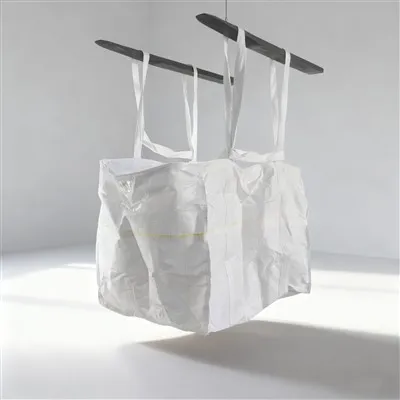
Hey there! As a supplier of Circular FIBC bags, I often get questions from customers about how to adjust the height of these bags for different applications. Well, you've come to the right place! In this blog, I'll share some practical tips and insights on this topic.
Let's start by understanding why adjusting the height of circular FIBC bags might be necessary. Different applications have different requirements. For example, if you're transporting bulk materials in a limited - height space like a small warehouse or a container, you'll need to have a shorter bag. On the other hand, if the storage area has high ceilings and you want to maximize the capacity of each bag, a taller bag would be ideal.
Measuring and Planning
Before you start adjusting the height, the first thing you gotta do is measure. You need to know the exact height requirements for your specific application. If it's for storage, measure the height of the storage rack. If it's for transportation, check the height clearance of the vehicle or the container.
Let's say you're planning to use the bags for storing sand in a warehouse. The height of the storage racks is 3 meters. You'll want to make sure the bags don't exceed this height to avoid any stacking issues. Measure the rack height from the floor to the top horizontal beam and note it down carefully.
Now, let's talk about how to actually adjust the height. There are a few common methods depending on the type of circular FIBC bag you have.
Cutting and Resealing
One straightforward way to adjust the height is by cutting and resealing the bag. But this should be done with caution. First, make sure you have the right tools. A sharp utility knife is a must - have for cutting the woven fabric of the FIBC bag.
Lay the bag flat on a stable surface. Mark the height you want to achieve with a permanent marker. Then, slowly and carefully cut along the marked line. After cutting, you need to seal the cut edge to prevent fraying. You can use heat sealing if you have the appropriate equipment. Heat sealing fuses the plastic fibers in the fabric together, creating a strong and smooth edge.
However, keep in mind that cutting and resealing can affect the structural integrity of the bag. If you cut too much, it might weaken the bag's ability to hold heavy loads. Also, make sure the heat - sealed edge is strong enough. If not, it could start to come apart during handling or transportation.
Using Zippers or Adjustable Straps
Another option is to use zippers or adjustable straps. Some of our Thickened Ton Bag models come with built - in zippers or adjustable straps for height adjustment.
If your bag has a zipper, simply unzip it to the desired height. This gives you the flexibility to change the bag's height multiple times according to your needs. For example, if you initially use the bag to store small - sized grains and later want to use it for larger items, you can easily adjust the height.
Adjustable straps work in a similar way. You can tighten or loosen the straps to make the bag taller or shorter. They are easy to use and don't require any special tools. Just pull on the straps until you reach the right height and then secure them.
Using Suspension Systems
In some cases, especially for industrial applications where large - scale circular FIBC bags are used, suspension systems can be employed to adjust the height. These systems typically consist of ropes or chains that are attached to the top of the bag.
By adjusting the length of the ropes or chains, you can control how much the bag sags and, therefore, its overall height. For instance, in a factory where the bags are used to transport chemicals, a suspension system can be used to lower the height of the bag when it's being loaded onto a conveyor belt with a low - height clearance.
Considering the Load Capacity
When adjusting the height of circular FIBC bags, you also need to consider the load capacity. A taller bag generally has more volume, but it might not be able to hold as much weight as a shorter, more compact bag. The stress on the bag's fabric increases as the height increases.
For example, if you have a Three Lifting Bottom Ton Bag and you make it taller, the weight of the contents will put more pressure on the bottom and the sides of the bag. This could potentially lead to the bag bursting or tearing. So, always check the manufacturer's guidelines regarding the load capacity at different heights.
Different Applications Require Different Approaches
Let's look at some specific applications and how to adjust the height accordingly.
Agriculture: In the agricultural industry, circular FIBC bags are often used to store grains, seeds, and fertilizers. If you're storing grains in a silo with a limited height, you can adjust the height of the bag to fit. You can use the cutting and resealing method if you don't need to change the height frequently. Or, if you have multiple types of grains with different storage requirements, adjustable straps or zippers are a great option.


Construction: Construction sites use circular FIBC bags to transport and store materials like sand, gravel, and cement. Since construction sites can have different storage and transportation constraints, flexibility in height adjustment is crucial. Suspension systems can be very useful here, allowing quick and easy height changes depending on whether the bag is being loaded onto a truck or stored in a temporary shed.
Chemical and Pharmaceutical Industries: These industries require strict control over the storage and transportation conditions. The height of the circular FIBC bags needs to be adjusted precisely. Using bags with built - in zippers or adjustable straps is a good choice as they can be adjusted without compromising the bag's integrity. Also, make sure the adjusted height meets all safety and regulatory requirements.
Custom - Made Solutions
If you have very specific height requirements that can't be met by the standard adjustment methods, we offer custom - made circular FIBC bags. We can manufacture bags with the exact height you need. Whether you need a Double Bottom Ton Bag with a unique height for a special project or a series of bags with different heights for a complex industrial process, we've got you covered. Just let us know your specifications, and our team will work on creating the perfect solution for you.
In conclusion, adjusting the height of circular FIBC bags for different applications is all about careful planning, choosing the right adjustment method, and considering the load capacity. Whether you're in the agriculture, construction, or chemical industry, there's a way to make the bag fit your needs.
If you're interested in purchasing circular FIBC bags or have any questions about height adjustment, feel free to reach out. We're here to help you find the best solutions for your business.
References
- Industry standards for FIBC bag design and use
- Manufacturer's guidelines for circular FIBC bags