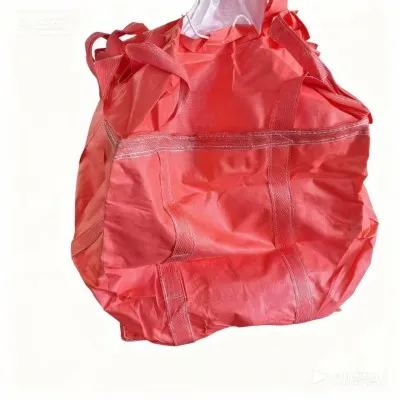
Hey there! As a supplier of FIBC Jumbo Bags, I often get asked a bunch of questions about these bags. One question that pops up quite a bit is, "Are FIBC Jumbo Bags resistant to UV rays?" Well, let's dive right into this topic and find out.


First off, let's understand what FIBC Jumbo Bags are. These are large, flexible containers used to transport and store all sorts of dry, flowable products like grains, chemicals, and minerals. They come in different shapes, sizes, and designs. For example, we've got the Cross Bottom Ton Bag, the Breathable Ton Bag, and the Top Feed Ton Bag. Each type has its own unique features and uses, but today we're mainly focused on their UV resistance.
Now, the short answer to whether FIBC Jumbo Bags are resistant to UV rays is: it depends. Most standard FIBC Jumbo Bags are made from polypropylene, a type of plastic. Polypropylene on its own isn't very good at blocking UV rays. When exposed to sunlight for a long time, the UV rays can break down the chemical bonds in the polypropylene. This leads to a process called photodegradation, which makes the bag weaker, more brittle, and can even cause it to crack or tear.
But here's the good news. We can do something about it! There are ways to make FIBC Jumbo Bags more resistant to UV rays. One common method is to add UV stabilizers to the polypropylene during the manufacturing process. These stabilizers work by absorbing or reflecting the UV rays, preventing them from reaching the polypropylene molecules. This significantly slows down the photodegradation process and extends the bag's lifespan when it's exposed to sunlight.
The effectiveness of the UV resistance depends on a few factors. The amount and type of UV stabilizer used play a big role. A higher concentration of a good-quality stabilizer will generally provide better protection. Also, the thickness of the bag matters. Thicker bags tend to be more resistant to UV damage because there's more material to absorb and dissipate the UV energy.
Let's talk about how different applications affect the need for UV resistance. If you're using the FIBC Jumbo Bags indoors or in a covered area, UV resistance might not be a big deal. The bags will be protected from direct sunlight, so they won't be exposed to the harmful UV rays. But if you're storing or transporting the bags outdoors, especially in sunny regions or for long periods, UV resistance becomes crucial. For example, if you're using these bags to store agricultural products in a field or chemicals in an open yard, you'll definitely want bags with good UV protection.
Another thing to consider is the color of the bag. Darker-colored bags tend to absorb more heat from the sun, which can accelerate the photodegradation process. Lighter-colored bags, on the other hand, reflect more sunlight and heat, so they're generally better at resisting UV damage. However, this isn't a hard and fast rule, and the quality of the UV stabilizer is still the most important factor.
Now, you might be wondering how to test the UV resistance of FIBC Jumbo Bags. There are a few methods. One is to use a UV chamber, which simulates long-term sunlight exposure in a short period. The bags are placed in the chamber, and UV lamps are used to shine on them. After a certain amount of time, the bags are inspected for signs of damage, like changes in color, strength, or flexibility. Another way is to conduct real-world tests. You can place some bags outdoors and monitor them over time to see how they hold up against the sun.
As a supplier, I always recommend that customers think about their specific needs when choosing FIBC Jumbo Bags. If UV resistance is important for your application, make sure to ask about the type and amount of UV stabilizer used in the bags. We can also provide samples for you to test in your own environment.
In conclusion, while standard FIBC Jumbo Bags aren't naturally resistant to UV rays, we can make them so by adding UV stabilizers. The level of UV resistance depends on several factors, including the stabilizer, bag thickness, color, and application. Whether you're in the agriculture, chemical, or any other industry that uses these bags, it's important to choose the right ones for your situation.
If you're interested in purchasing FIBC Jumbo Bags and want to discuss your requirements in more detail, feel free to reach out. We're here to help you find the best solution for your needs.
References
- ASTM International standards on testing FIBCs
- Industry research papers on polypropylene photodegradation and UV stabilization