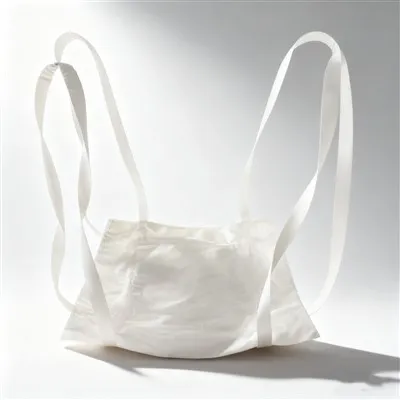
Polypropylene acts as the core mainstream material for manufacturing industrial bulk bags. Featuring stable chemical traits, excellent physical properties and outstanding cost efficiency, it has become the top-choice material for bulk-material packaging, warehousing and transportation. Surpassing traditional packaging materials such as PE and PVC, polypropylene has no obvious performance drawbacks, integrating durability, stability, safety and cost-effectiveness. It adapts perfectly to complex, variable industrial working scenarios and satisfies packaging and transport demands across all industries, standing as a mature packaging material validated by long-term market use.
The most prominent advantage of Polypropylene Bags lies in their superior physical mechanical properties, durability and reusability. Polypropylene features a compact, stable molecular structure. Finished bags adopt uniform warp-and-weft weaving to form a tough, deformation-resistant framework. Their tensile strength and tear resistance far outperform ordinary packaging materials, stably supporting several tons of material without bulging, deforming, cracking or splitting. Boasting excellent wear resistance, Polypropylene Bags resist scratches, abrasion and punctures during manual dragging, mechanical loading, stacking friction and outdoor collision. They endure regular operational wear and support multiple reuse cycles to effectively cut enterprises' packaging material expenses.
Furthermore, the material possesses inert, stable chemical properties with exceptional corrosion resistance and anti-contamination performance. At room temperature, polypropylene does not chemically react with air, water, mild acid, alkali, oil, salt and other common substances, eliminating risks of corrosion, deterioration, aging and brittleness. It works for packaging chemical raw materials, construction minerals, industrial pellets, grain, feed and other civil goods without being corroded by stored contents. Meanwhile, the pure material produces no chemical precipitation, lint shedding or discoloration and carries no strange odors, so it never causes secondary contamination to internal materials. It safeguards material cleanliness and fits complex work environments with heavy dust, high humidity and mild corrosive elements, covering a wide spectrum of industrial applications.
Polypropylene Bags offer strong environmental adaptability and superior temperature and moisture resistance. The material supports a wide temperature range and maintains consistent performance all year round. It will not harden, turn brittle or crack at low temperatures, nor soften, deform or stick together at high temperatures, suiting variable temperature operating conditions in different regions and seasons. Additionally, it has natural hydrophobic, moisture-proof characteristics that block water penetration and isolate external moisture and mist. It effectively stops internal materials from caking or developing mildew due to dampness, providing long-lasting moisture-proof, dust-proof and anti-oxidation protection for goods, and fitting warehousing, outdoor transit and long-distance transport scenarios perfectly.
Lastly, polypropylene material is eco-friendly, lightweight, efficient and cost-effective. Non-toxic and odorless, it complies with universal safety standards and can safely package grain, feed and other food-contact materials with zero safety hazards. Its lightweight composition adds no extra load to cargo, eases handling difficulty and boosts efficiency for both manual labor and mechanical operations. It features strong anti-aging performance and stable storage performance without deterioration while idle, delivering a long service life and low failure rate for repeated cyclic use. In summary, Polypropylene Bags integrate full-spectrum reliable performance, strong practicality and low long-term usage costs, ranking as the highest-value preferred material in the industrial packaging sector.

 English
- Português
- Deutsch
- Français
- русский
- Български
- Nederlands
- 日本語
- Türkçe
- O'zbek
- اردو
- Ελληνικά
- Català
- magyar
- Svenska
- Lietuvių
- Việt Nam
- 한국어
- Español
- Italiano
- عربي
- Čeština
- ไทย
- Eesti
- Gaeilgenah Éireann
- Bai Miaowen
- íslenska
- Cymraeg
- Polski
- hrvatski
- українська
- bosanski
- فارسی
- Latviešu
- עברית
- România limbi
- dansk
- Norsk
- suomi
- slovenčina
- slovenščina
- हिंदी
- Indonesia
- Melayu
- Malti
- Kreyòl Ayisyen
- বাংলা
- Srbija jezik (latinica)