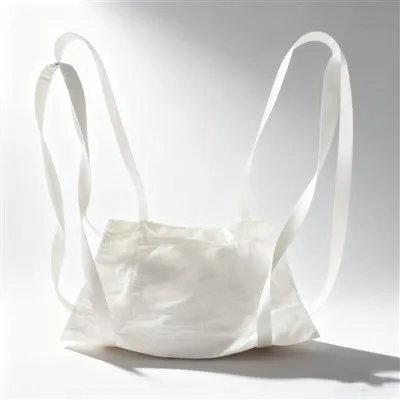
Whether Flood Prevention Sandbags can be reused mainly depends on manufacturing materials, service conditions and post-use maintenance. Not all sandbags are disposable. Standard professional flood-control sandbags available on the market support repeated recycling, whereas low-end ordinary woven sacks are disposable supplies only. Currently, mainstream Flood Prevention Sandbags fall into two material categories. The first type is thickened woven sacks made of virgin polypropylene, widely used in engineering and municipal flood control. Featuring anti-aging properties, strong tear resistance, waterproof and anti-corrosion performance, they are produced with reinforced edge wrapping and double stitching, so they rarely sustain damage after a single conventional flood control deployment. The second type is heavy canvas sandbags with thicker texture, higher toughness, excellent wear and puncture resistance, enabling more reuse cycles and a longer service life.
Under conventional flood control scenarios, sandbags used only for short-duration water retention, briefly immersed, free of punctures by sharp objects and without prolonged sun exposure can be reused. Once floodwaters recede, standardized treatment allows long-term storage for standby use. First, empty residual sand and silt inside the bags, rinse them lightly with clean water to remove attached impurities and corrosive muddy water, then place them in a ventilated and dry area for complete drying. Residual moisture inside bags must be eliminated to avoid mold growth that causes material embrittlement. After drying, stack the sandbags indoors in cool, dry and shaded warehouses. Avoid open-air exposure, rain and dampness. With proper storage, they can be recycled 3–5 times with a service life of 2 to 3 years.
On the contrary, sandbags meeting the following conditions must be scrapped and never reused. First, bags pierced or torn by gravel, branches, metal sharp objects with visible holes. Second, bags soaked in sewage or seawater for a long time, hardened, embrittled and discolored due to acid, alkali and salt corrosion. Third, bags stored outdoors for extended periods under sunlight, suffering aging cracking, loose woven fibers and detached stitching. Fourth, bags severely deformed and structurally damaged under strong flood scouring and extrusion. Such sandbags completely lose their waterproof, tensile and compressive properties. Secondary use easily triggers water leakage, rupture and collapse, bringing major hidden dangers to flood safety.
It should also be noted that thin disposable woven sacks made from recycled materials have low thickness, poor toughness and no anti-aging treatment. They are only suitable for emergency single use. Deformation and embrittlement normally occur after use, preventing secondary recycling. In summary, premium qualified Flood Prevention Sandbags support reuse. The prerequisites include proper deployment, timely cleaning and standardized storage. Timely replacement of damaged and aged sandbags guarantees safe and effective flood control every time.