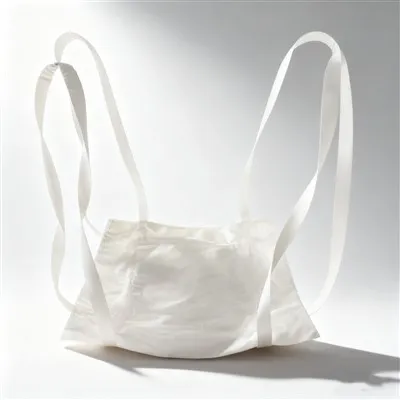
Durable Flood Control Sandbags deliver outstanding performance in intercepting standing water and blocking water flow at community gateways. They fully meet residential compounds' practical demands for emergency water retention, backflow prevention and standing water containment during flood seasons, and adapt to pavement conditions and water accumulation scenarios at most residential entrances.
Standing water at community gateways mainly consists of shallow flowing and stagnant rainwater formed when road drainage lags after heavy rains. The water flows slowly with limited impact force, without extreme conditions such as rapid torrents or high-pressure currents. This makes it a standard flood prevention scenario where sandbags can maintain stable and optimal water-blocking performance.
Entrances of many residential compounds sit at relatively low elevations. During heavy rainfalls, rainwater quickly converges at these low-lying gate areas and forms extensive standing water. This severely disrupts residents' daily travel on foot, electric vehicles and private cars, creating hazards such as slippery pavements and splashing water that soaks clothing. Worse still, rainwater may seep through gaps under door thresholds into security booths, underground garage entrances and building lobbies. This leads to slippery indoor floors, damp wall surfaces and damaged electrical devices exposed to water, bringing countless troubles to daily property management and incurring extra maintenance costs. Durable Flood Control Sandbags can fundamentally eliminate such standing water hazards.
Constructed with thick, flexible fabric, these sandbags become full and solid once filled with sand. They possess far better structural support and ground adhesion than thin ordinary sandbags. When laid flat on asphalt or cement pavements, they fit closely against the ground and avoid water leakage caused by hollow bottom gaps, a common flaw of overly soft sandbags.
For deployment, simply stack the sandbags in the staggered overlapping pattern widely adopted in flood control operations. Layered cross stacking allows sandbags to interlock tightly and secure one another through mutual compression. The formed integral structure resists loosening, sliding or collapse under continuous water erosion or minor external contact.
When faced with overflowing water from sustained rainfall, these sandbags block water flow paths and drastically slow water diffusion. This buys sufficient time for drainage systems to pump out water or rely on natural runoff, preventing standing water from deepening further.
In addition, Durable Flood Control Sandbags have slip-resistant and wear-resistant surfaces. Stacked barriers remain flat and stable without bulges, tilting or scattering. Neither pedestrians passing by nor low-speed vehicles will shift the sandbags, guaranteeing high safety levels.
The entire deployment process is simple and straightforward, requiring no professional equipment or specialized technicians. Property staff can rapidly complete placement, adjustment and storage of the sandbags. Suitable for both sudden emergencies and long-term flood prevention, their stable and practical performance fully satisfies all water interception requirements at community gateways prone to standing water.

 English
- Português
- Deutsch
- Français
- русский
- Български
- Nederlands
- 日本語
- Türkçe
- O'zbek
- اردو
- Ελληνικά
- Català
- magyar
- Svenska
- Lietuvių
- Việt Nam
- 한국어
- Español
- Italiano
- عربي
- Čeština
- ไทย
- Eesti
- Gaeilgenah Éireann
- Bai Miaowen
- íslenska
- Cymraeg
- Polski
- hrvatski
- українська
- bosanski
- فارسی
- Latviešu
- עברית
- România limbi
- dansk
- Norsk
- suomi
- slovenčina
- slovenščina
- हिंदी
- Indonesia
- Melayu
- Malti
- Kreyòl Ayisyen
- বাংলা
- Srbija jezik (latinica)