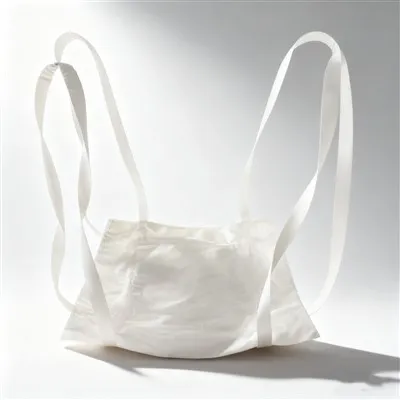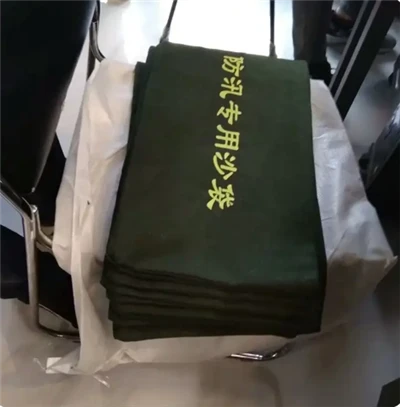
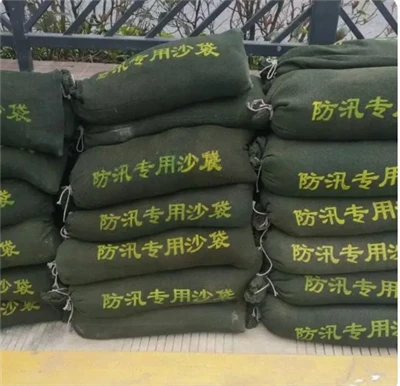
Flood Prevention Sandbags are commonly used as a temporary protective measure when rainwater, floodwater, or accumulated water may enter areas that need protection. By arranging the sandbags in suitable locations, they can create a barrier that helps block or slow the movement of water and reduce the risk of water entering protected areas. This makes them useful for responding to sudden rainfall, temporary flooding, and other situations where water may spread into buildings or important spaces.
Flood Prevention Sandbags can be used around residential entrances, commercial buildings, warehouses, workshops, underground garages, community entrances, and other locations that may be affected by accumulated water. They are particularly useful when water levels rise quickly and there is a need to establish a temporary barrier within a short period of time. Because they can be moved and arranged according to actual conditions, users can reinforce vulnerable areas based on the layout of the site and the expected direction of water flow.
One of the main functions of Flood Prevention Sandbags is to create a physical barrier between incoming water and the area that needs protection. When several sandbags are placed closely together, they can form a continuous protective line. This barrier can help slow down water movement and reduce the amount of water that reaches entrances, doorways, low-lying areas, and other vulnerable points.
When using Flood Prevention Sandbags, it is important to identify the areas most likely to be affected by water. Entrances, doorways, low-lying sections, corners, openings, and connections between different ground surfaces are often areas that require additional protection. Sandbags can be arranged continuously along these locations to reduce the possibility of water passing through gaps. In some situations, the protective arrangement may need to extend beyond the immediate entrance so that water does not simply flow around the ends of the barrier.
Flood Prevention Sandbags can also be used as an auxiliary measure when existing drainage or water-control measures are temporarily insufficient. For example, when heavy rainfall causes water to accumulate faster than it can be drained, sandbags can provide an additional temporary barrier around vulnerable areas. They can also be repositioned when site conditions change, allowing the protective arrangement to be adjusted according to the movement of water.
In addition to blocking water, Flood Prevention Sandbags can help slow down the movement of water and reduce the direct impact of flowing water on protected areas. However, they should generally be considered a temporary or auxiliary protective measure rather than the only method of flood control. Their effectiveness depends on factors such as site conditions, arrangement method, water flow direction, ground conditions, the continuity of the barrier, and the overall protective layout.
Overall, Flood Prevention Sandbags are primarily intended to provide temporary protection against water intrusion. Their effectiveness depends not only on the condition of the bags themselves but also on proper site preparation, reasonable placement, close arrangement, regular inspection, and timely adjustment. When these factors are considered together, Flood Prevention Sandbags can serve as a practical auxiliary solution for protecting buildings, facilities, and other vulnerable areas during temporary flooding or heavy rainfall.