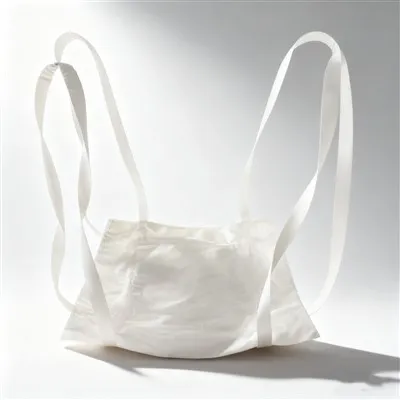
In the context of the global logistics industry's transformation towards efficiency, low carbon, and flexibility, the pain points of traditional wooden and plastic hard pallets-such as bulkiness, inconvenient storage, and high export compliance costs-have become increasingly prominent. As a new type of lightweight container tool, soft pallets (also known as flexible pallets or sling pallets) have quickly penetrated various fields such as chemicals, grain, minerals, and cross-border trade, relying on their core advantages of foldability, low cost, and strong adaptability. They have become a key link connecting production, warehousing, and transportation, and are particularly favored by cross-border buyers from Southeast Asia, Russia, and South Korea. This article will comprehensively dissect the core value of this new logistics tool from its core definition, classification, advantages, selection skills, and industry applications, helping industry practitioners select products accurately and apply them efficiently.
I. Understanding Soft Pallets: Definition and Core Structure
Soft pallets are not "soft and unsupported"; instead, they are flexible bearing platforms made of high-strength synthetic fibers through precision weaving or composite processes. They are mainly used to replace traditional hard pallets to realize the containerization, hoisting, transportation, and storage of bulk goods. Their core structure is designed around "load-bearing + convenient operation" and mainly consists of three parts to ensure bearing safety and operational convenience:
- Base Cloth Layer: The core load-bearing part, mostly made of polypropylene (PP), polyethylene (PE) woven cloth, or composite materials, with tear resistance, wear resistance, moisture resistance, and other characteristics. The grammage of the base cloth (80-220g/m²) directly determines the load-bearing capacity of the pallet-the higher the grammage, the stronger the tear resistance;
- Slings/Handles: The core components for hoisting and handling, usually set around or in the middle of the pallet. The material is mainly polyester or polypropylene, with a breaking strength of 5-20 tons. The common number is 2 slings or 4 slings. Among them, the 4-sling design has become the mainstream choice for cross-border transportation and heavy-duty handling due to its stable hoisting and uniform load-bearing;
- Auxiliary Structures: Some high-end products will add accessories such as edge reinforcement (double-layer cloth or webbing edging), anti-slip coating, waterproof film, and label pockets, which are used to enhance tensile capacity, prevent goods from sliding, resist moisture, and facilitate goods labeling, adapting to different scenario needs.
Compared with traditional hard pallets, the core advantages of soft pallets are concentrated in three words: "light, economical, and flexible". They can not only solve the pain points of hard pallets but also adapt to the lightweight and efficient needs of modern logistics. They are especially suitable for "lightweight, temporary, short-distance" logistics scenarios, as well as cross-border export and other scenarios with high compliance requirements.
II. Core Classification of Soft Pallets: Divided by Structure and Function to Adapt to Different Scenarios
There are various classification methods for soft pallets. Combined with industry application scenarios and procurement needs, they are mainly divided into the following categories by structure, style, and function, facilitating practitioners to accurately match their own needs and helping cross-border buyers from Southeast Asia, Russia, and South Korea quickly lock in suitable products:
(I) Classification by Structure and Style (Most Commonly Used)
- By Shape: #Square Soft Pallet, #Rectangular Soft Pallet, #Round Soft Pallet. Among them, square and rectangular pallets are the most widely used due to convenient stacking and high space utilization, adapting to most bagged and boxed goods; round pallets are suitable for the containerization of irregular materials;
- By Number of Lifting Points: #2Lugs Soft Pallet, #4Lugs Soft Pallet, #Cross Sling Pallet. 4-sling soft pallets are stable in hoisting and stronger in load-bearing, suitable for cross-border transportation and heavy-duty goods handling; 2-sling soft pallets are lightweight and flexible, suitable for short-distance turnover and lightweight goods handling;
- By Bottom Structure: #Flat Bottom Soft Pallet, #Grid Bottom Soft Pallet, #Discharge Bottom Soft Pallet. Flat bottom is suitable for conventional stacking, grid bottom is reinforced for load-bearing, and discharge bottom is suitable for granular and powder materials, enabling quick unloading and adapting to the needs of chemical, grain, and other industries.
(II) Classification by Function and Material
- By Material: #Woven PP Soft Pallet, #Polyester Soft Pallet, #Food Grade Soft Pallet, #Chemical Grade Soft Pallet. PP material has high cost performance and is the industry mainstream; polyester material is wear-resistant and anti-aging, suitable for high-frequency use scenarios; food-grade and chemical-grade pallets are aimed at special materials, meeting hygiene standards and acid-base corrosion resistance requirements respectively;
- By Function: #UV Stabilized Soft Pallet, #Waterproof Soft Pallet, #Reinforced Soft Pallet, #Foldable Soft Pallet. UV-stabilized models are suitable for long-term outdoor use, waterproof models are adapted to humid environments, reinforced models are suitable for heavy goods, and foldable models focus on solving the problem of warehouse space occupation.
III. Core Advantages of Soft Pallets: Why Are They the Preferred Choice for Modern Logistics?
Compared with wooden, plastic, and metal hard pallets, the advantages of soft pallets run through the entire process of warehousing, transportation, use, and recycling. They are especially in line with the cost control needs of cross-border trade and small and medium-sized enterprises, which is the core reason why they are favored by cross-border buyers from Southeast Asia, Russia, and South Korea:
1. Lightweight + Foldable, Greatly Reducing Comprehensive Costs: Under the same load-bearing capacity, the weight of a soft pallet is only 1/10 of a wooden pallet and 1/5-1/8 of a plastic pallet, which can greatly reduce transportation energy consumption and increase the single load capacity; when empty, it can be folded into a flat shape, with the volume reduced by more than 80%, which greatly saves warehouse storage space and transportation vehicle space. It is especially suitable for the "empty pallet return" scenario in cross-border transportation, reducing logistics costs;
2. Strong Adaptability, Unbounded Scenarios: The flexible structure can fit irregular goods, adapting to various materials such as bagged, boxed, granular, and block materials, covering multiple industries such as grain, chemical fertilizers, chemical raw materials, and building materials; it can be adapted to various handling equipment such as forklifts and cranes, which can not only meet the needs of internal workshop transfer and short-term warehouse storage in factories but also adapt to cross-border sea and air transportation scenarios without additional adaptation equipment;
3. Export Compliance, Avoiding Quarantine Risks: Replacing wooden pallets can avoid international quarantine (such as IPPC fumigation requirements), eliminating the need for additional fumigation certificates and reducing export compliance costs. It is especially suitable for the export needs of cross-border buyers from Southeast Asia, Russia, and South Korea, simplifying customs clearance procedures and improving transportation efficiency;
4. Safe and Durable, High Cost Performance: Adopting high-strength base cloth and reinforcement technology, the dynamic load-bearing capacity is 0.5-3 tons, and the static load-bearing capacity is 1-5 tons, which can meet the handling needs of most light and medium-sized goods; it has tear resistance, moisture resistance, mildew resistance, moth resistance, and other characteristics. When stored in a dry indoor environment, the service life can reach 1-3 years, and the materials can be recycled and reused, in line with the green logistics trend, with comprehensive cost performance far higher than traditional hard pallets;
1. High Degree of Customization, Adapting to Personalized Needs: It can customize size, load-bearing, material, number of lifting points, and functional accessories according to the weight, size, and shape of goods, as well as the use environment (temperature, humidity, chemical contact). For example, customize acid-base resistant models for the chemical industry, food-grade models for the food industry, and anti-aging and waterproof models for cross-border transportation, meeting the personalized needs of different buyers.
IV. Soft Pallet Selection Skills: Avoid Mistakes and Accurately Match Needs
At present, the quality of soft pallets on the market is uneven. Many enterprises have problems such as pallet deformation, damage, and sling breakage due to improper selection, affecting transportation safety. Combined with industry experience and procurement pain points, especially for the needs of cross-border buyers from Southeast Asia, Russia, and South Korea, the following 4 core selection skills are summarized to avoid use mistakes:
1. Select Based on Load-Bearing Needs: Choose the appropriate base cloth grammage and sling strength according to the total weight of the goods. It is recommended to reserve a safety factor of more than 2.5 times. For example, 5-ton goods need to choose products with a sling breaking strength ≥ 8 tons; the base cloth grammage is recommended to be more than 120g/㎡. The higher the load-bearing demand, the higher the base cloth grammage should be, to avoid base cloth tearing or sling breaking due to overloading;
2. Select Based on Use Scenarios: For outdoor use, choose UV-stabilized soft pallets containing UV additives to avoid base cloth embrittlement caused by direct sunlight; for humid and chemical environments, choose waterproof and acid-base resistant materials; for cross-border transportation, prioritize 4-sling reinforced models to ensure stable hoisting and meet export compliance requirements; for high-frequency use scenarios, it is recommended to choose reinforced models with polyester slings and thickened base cloth to extend service life;
3. Select Based on Size Matching: The size of the soft pallet should be consistent with the stacking size of the goods. For example, if the goods are stacked into a 100×100cm pile, the size of the soft pallet is recommended to be 100×100cm or slightly larger, to avoid unstable handling caused by goods exceeding the edge; the sling spacing should be adapted to the forklift fork width (usually 60-120cm) to ensure stable and non-slip insertion of the forklift;
4. Pay Attention to Craftsmanship and Quality: Prioritize products with double-thread sewing and hot-melt reinforcement, avoid single-thread or manual sewing to prevent thread breakage due to force pulling; check the weaving density of the base cloth-the higher the density, the stronger the tear resistance; the connection between the sling and the base cloth needs to be reinforced, which is the key to avoiding falling off during use; at the same time, you can ask the manufacturer to provide load-bearing test reports to ensure that the products meet industry standards (such as ISO 1496-1, ISO 21898, etc.).
V. Industry Applications and Development Trends of Soft Pallets
(I) Core Application Scenarios
The application of soft pallets has covered many industries, and they play an irreplaceable role especially in the following scenarios, which are also the core procurement scenarios for cross-border buyers from Southeast Asia, Russia, and South Korea:
- Agricultural Field: Used for the containerization and handling of bagged agricultural products such as grain, feed, and seeds, which can reduce the number of single-bag handling, improve warehousing and transportation efficiency, and adapt to the needs of short-distance rural turnover and cross-border agricultural product export;
- Chemical Field: Adapt to materials such as chemical fertilizers, plastic particles, and chemical raw materials. Food-grade and chemical-grade soft pallets can meet hygiene standards and acid-base corrosion resistance requirements respectively, avoiding material pollution and pallet damage;
- Building Materials Field: Used for short-distance transfer of materials such as sand, gravel, cement, and ceramic tiles. The foldable design is convenient for on-site storage, and the reinforced model can meet the load-bearing needs of heavy materials;
- Cross-Border Trade: As a container tool for export goods, it avoids the fumigation requirements of wooden pallets, simplifies customs clearance procedures, and the lightweight design reduces cross-border transportation costs, adapting to the logistics systems of countries such as Southeast Asia, Russia, and South Korea;
- Warehousing Turnover: Suitable for internal workshop transfer and short-term warehouse storage in factories. The foldable design saves warehouse space, is lightweight and easy to operate, reduces the labor intensity of workers, and improves warehousing turnover efficiency.
(II) Industry Development Trends
With the rapid development of the global logistics industry and the advancement of green transformation, the market demand for soft pallets will continue to grow. According to data from the China Federation of Logistics and Purchasing, the market size of China's flexible container industry exceeded 38 billion yuan in 2024, with a compound annual growth rate of 9.2%, of which the proportion of soft pallet products continues to increase. In the future, soft pallets will develop in three directions: first, intelligent upgrading, integrating technologies such as RFID and built-in sensors to realize real-time monitoring of pallets and goods, improving logistics management efficiency; second, environmental protection upgrading, using recyclable and degradable materials to meet the global green supply chain development trend; third, customized upgrading, providing one-stop container solutions for personalized needs of different industries and scenarios, further expanding the application scope.
VI. Conclusion
As the core carrier of modern logistics lightweight, efficient, and green transformation, soft pallets are gradually replacing traditional hard pallets with their core advantages of lightweight, foldability, strong adaptability, and export compliance, becoming the preferred container tool for industries such as chemicals, grain, and cross-border trade. For cross-border buyers from Southeast Asia, Russia, and South Korea, soft pallets can not only reduce logistics costs and simplify customs clearance procedures but also adapt to the logistics scenarios and material needs of different countries; for industry practitioners, accurately mastering the classification and selection skills of soft pallets can give full play to their core value, realizing the improvement of warehousing and transportation efficiency and cost optimization.
In the future, with the continuous upgrading of technology and the continuous expansion of application scenarios, soft pallets will play a more important role in the global logistics system, promoting the logistics industry to develop in a more efficient, low-carbon, and flexible direction, and becoming an important logistics link connecting global trade.