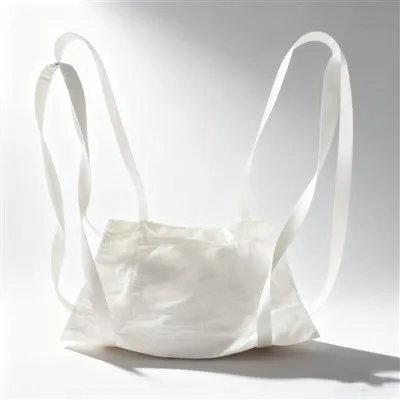
Circular Ton Bag has favorable reusability and belongs to eco-friendly recyclable industrial packaging. Different from disposable plastic packages, it is mainly made of high-strength polypropylene woven cloth, together with wear-resistant sewing technology, thick lifting belts and bottom reinforcement design. It has a stable structure, sufficient toughness, great tear resistance, wear resistance and anti-aging performance. With standard operation, it can be repeatedly used for loading, turnover and warehousing, greatly cutting packaging procurement costs for enterprises and becoming a mainstream choice for low-carbon industry. Circular Ton Bags on the market include ordinary versions, thickened versions and industrial versions made of virgin materials. Different types vary obviously in reuse cycles.
Standard ordinary Circular Ton Bags adopt conventional woven cloth and basic sewing craft with moderate load capacity, suitable for storage and transportation of light materials. Under standard use and proper storage, they can be stably reused 3 to 5 times without bag tearing, lifting belt breakage or bottom leakage. Thickened reinforced Circular Ton Bags use encrypted thickened woven materials, double stitching, reinforced bottom wrapping and widened lifting belts, which greatly improve wear resistance. They adapt to heavy materials, long-distance transportation and multi-layer stacking, with reuse cycles reaching 8 to 10 times and longer service life. High-end virgin-material food-grade and chemical-grade Circular Ton Bags have high material purity, anti-aging and anti-corrosion properties, delivering stable recycling performance and low reuse loss.
To extend the service life of Circular Ton Bag, standardized operation and storage rules must be followed. After each use, residual materials inside the bag need to be removed. Simple cleaning can be completed by tapping and wiping to prevent residual materials from caking, corroding and wearing the bag body. Then the bag should be folded flat and stored in dry, ventilated and shaded indoor areas, avoiding direct sunlight, rain immersion and low-temperature cracking to prevent accelerated aging and brittleness of materials. Inspection must be carried out before each reuse, focusing on checking lifting belts, sewing seams, bag body and bottom for damage, thread breakage, abrasion and aging hardening. The bag can be used continuously only when no abnormality is found.
If the Circular Ton Bag suffers extensive damage, broken lifting belts, brittle aged materials, contamination by corrosive substances or severe deformation that prevents regular placement, reuse must be stopped immediately to avoid safety accidents such as leakage, collapse and falling after material loading. In addition, Circular Ton Bags once filled with toxic, harmful or heavily polluting materials are not recommended for reuse for safety risks and need to be recycled and disposed of in compliance with regulations. Overall, Circular Ton Bags manufactured in accordance with standards are recyclable products. Rational use and proper maintenance can maximize its reuse value and reduce packaging consumable costs of enterprises.